The Journey of Snowmelt — From the Mountain to Your Glass
From snow falling on Daisetsuzan to water from your tap. Tracing water's decades.
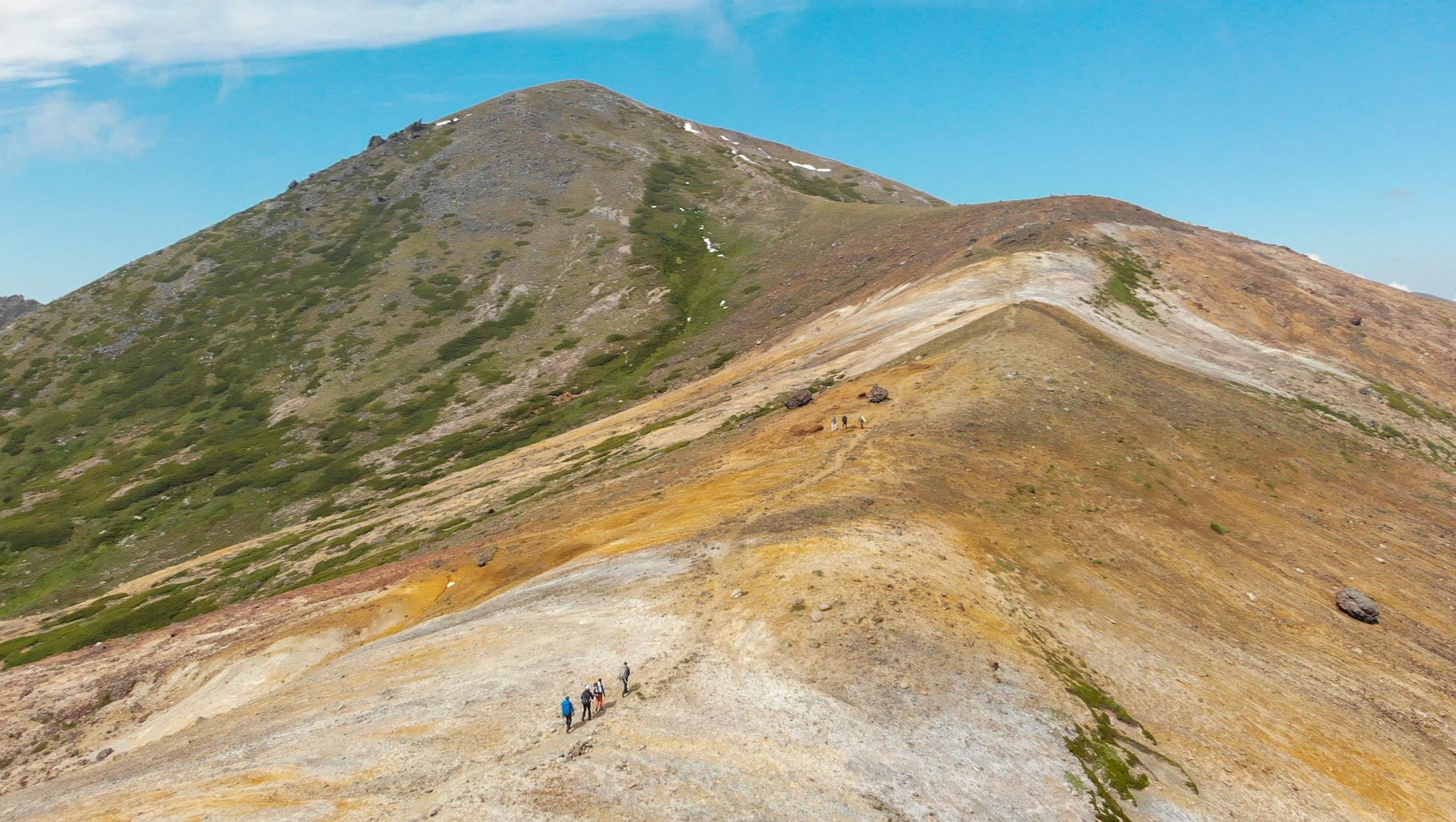
The journey begins in a snow patch at 2,000 meters. Several meters of snow fall on Daisetsuzan each year. Snow patches that last into summer slowly melt by day and seep into gaps in the rock. From here, it's a long way.
The layers of volcanic rock form a giant filtration system. Water descends between gravel and rock at a few centimeters a day. Ask a geologist, and the time from snow falling on the mountain to Higashikawa's groundwater being pumped up is several years at the shortest, decades at the longest. In other words, today's glass may be snow from the Showa era.
Today's glass may be snow from the Showa era.
The journey's midpoint is the Chubetsu River. Gathering Daisetsuzan's water and flowing toward Asahikawa, it's also a walking route for the Town Walk Club. As you walk watching its surface, water is traveling underground beneath your feet in the same direction, even more slowly.
And the endpoint is each household's well. Higashikawa has no water treatment plant. No chlorine either. Trusting the mountain's filtration as it is, people pump it up and drink it. "Natural mineral water for cooking rice and for the bath" — a luxury that's extraordinary when you think about it has become this town's everyday.
Mountain School — this month's homework: climb to Asahidake's Sugatami Pond to see this journey's starting point. We'll guide you on Hiking Club STEP 1.